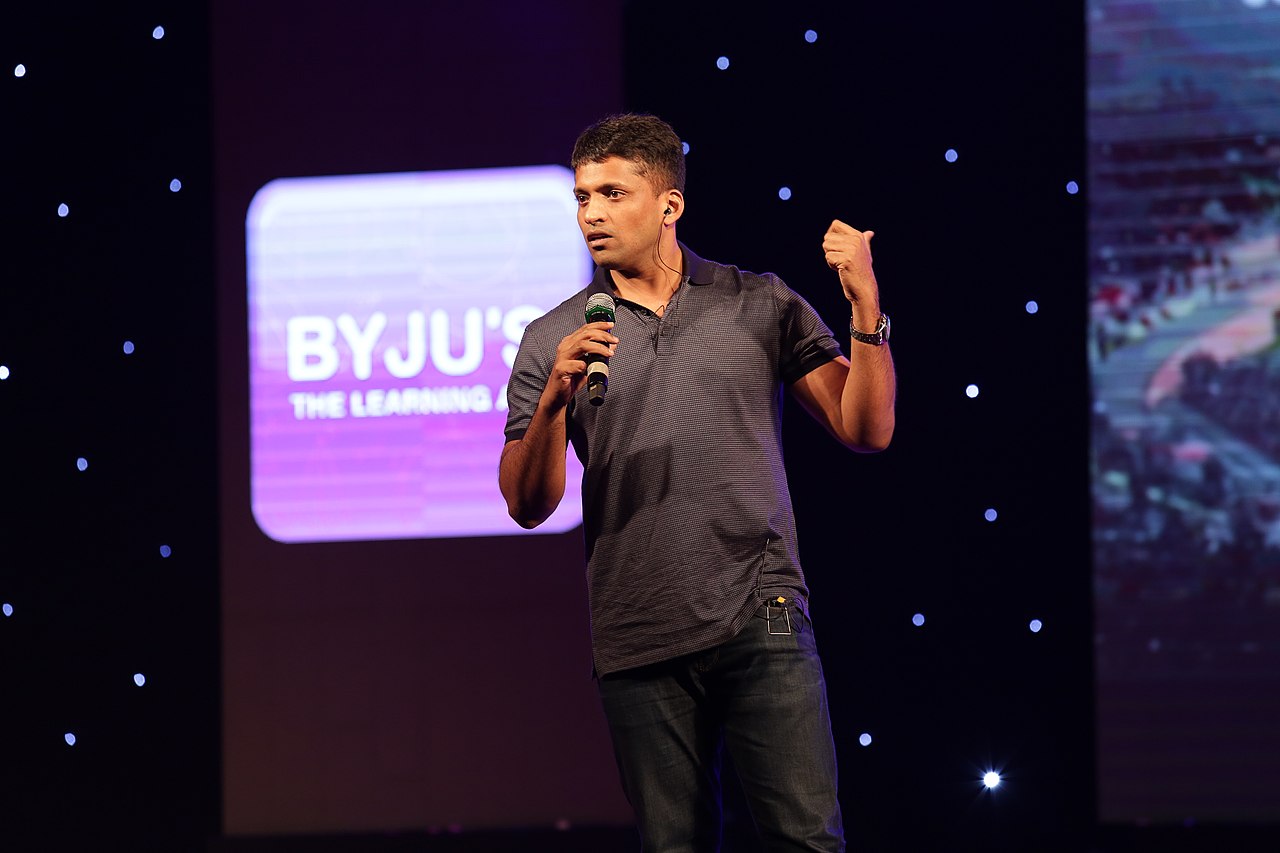
There was a strange period when BYJU’S seemed to exist everywhere at once.
The logo appeared on the Indian cricket team jersey. Shah Rukh Khan smiled through advertisements between IPL overs. Lionel Messi partnered with the company during the FIFA World Cup. YouTube seemed physically incapable of playing two videos in a row without inserting a BYJU’S advertisement in between. Even parents who barely understood what “edtech” meant knew the company’s name.

For a while, BYJU’S stopped feeling like a startup and began feeling oddly inevitable, as though India had collectively decided this was what the future of education looked like.
And honestly, for many students, that belief did not feel completely irrational.
I actually liked it — and that matters
Back in 2017 and 2018, I genuinely liked BYJU’S. During classes 8 and 9, the app felt refreshingly different from normal tuition culture. The animations were smooth, concepts looked visual instead of mechanical, and lessons felt designed by people who understood that most children are bored out of their minds during science chapters. For once, studying atoms did not feel like punishment. Geometry diagrams moved. Volcanoes erupted. The app made school subjects look strangely cinematic.
That early version of BYJU’S solved a real problem, which is important to acknowledge, because after every corporate collapse people suddenly pretend the company was always terrible from the beginning. That is usually not true. Most giant companies do not fail because they never had value. They fail because somewhere along the way, success changes the incentives surrounding the product that made people trust them in the first place.
The teacher who became inevitable
Byju Raveendran’s rise almost sounded too perfect for startup mythology. An engineer from Kerala becomes famous teaching CAT aspirants in packed auditoriums, turns recorded lessons into a technology platform, catches India at exactly the moment smartphones and cheap internet explode across the country, and suddenly finds himself running one of the most valuable startups in the world.
Investors loved the story. Sequoia (now Peak XV) invested. Then came Tiger Global, Prosus, Silver Lake, General Atlantic, the Chan Zuckerberg Initiative, and SoftBank. Every funding round made the company appear larger, smarter, and more unstoppable.
But the company was not merely raising money. It was spending aggressively too.
An app that tried to become an ecosystem
Between 2020 and 2022, BYJU’S went on one of the largest acquisition sprees in Indian startup history. It bought WhiteHat Jr. for roughly $300 million, acquired Aakash Educational Services in a deal reportedly worth nearly $1 billion, and picked up Great Learning, Toppr, Epic, Tynker, and several other companies across different segments of education.
From the outside, the strategy looked brilliant. A student could theoretically begin with school lessons on BYJU’S, move into coding through WhiteHat Jr., prepare for medical or engineering entrance exams through Aakash, learn professional skills through Great Learning, and access international reading platforms through Epic. The company was no longer trying to build an app. It was trying to build an education ecosystem.
The problem is that acquiring companies is often easier than integrating them. Every acquisition brings different teams, cultures, technology systems, and financial structures — and fresh operational complexity. (Years later, Raveendran himself would call Aakash his best acquisition — and WhiteHat Jr a “business mistake”.) During the boom years, investors largely tolerated that aggression, because global venture capital was still rewarding growth above almost everything else.
The pandemic intensified that optimism dramatically. Online learning exploded overnight, and the assumption underneath the entire industry was simple: once students shifted online, they would never fully go back.
But history has a habit of embarrassing industries that believe temporary conditions are permanent.
As schools reopened, the economics changed fast. Growth slowed. Customer acquisition got harder. Investors stopped rewarding expansion at any cost and started asking uncomfortable questions about profitability and cash flow — and that shift exposed problems momentum had been hiding.
When the calls started
Somewhere in those years, public perception quietly turned. The company that once felt like a smart senior explaining science before exams slowly started feeling like a credit card salesman with your phone number. Almost everybody seemed to know someone with a BYJU’S story: a cousin pressured into an expensive course, parents trapped in endless follow-ups, families discussing EMI plans for schoolchildren with the seriousness of home-loan negotiations. The internet filled with jokes about dodging BYJU’S calls the way people joke about avoiding insurance agents.
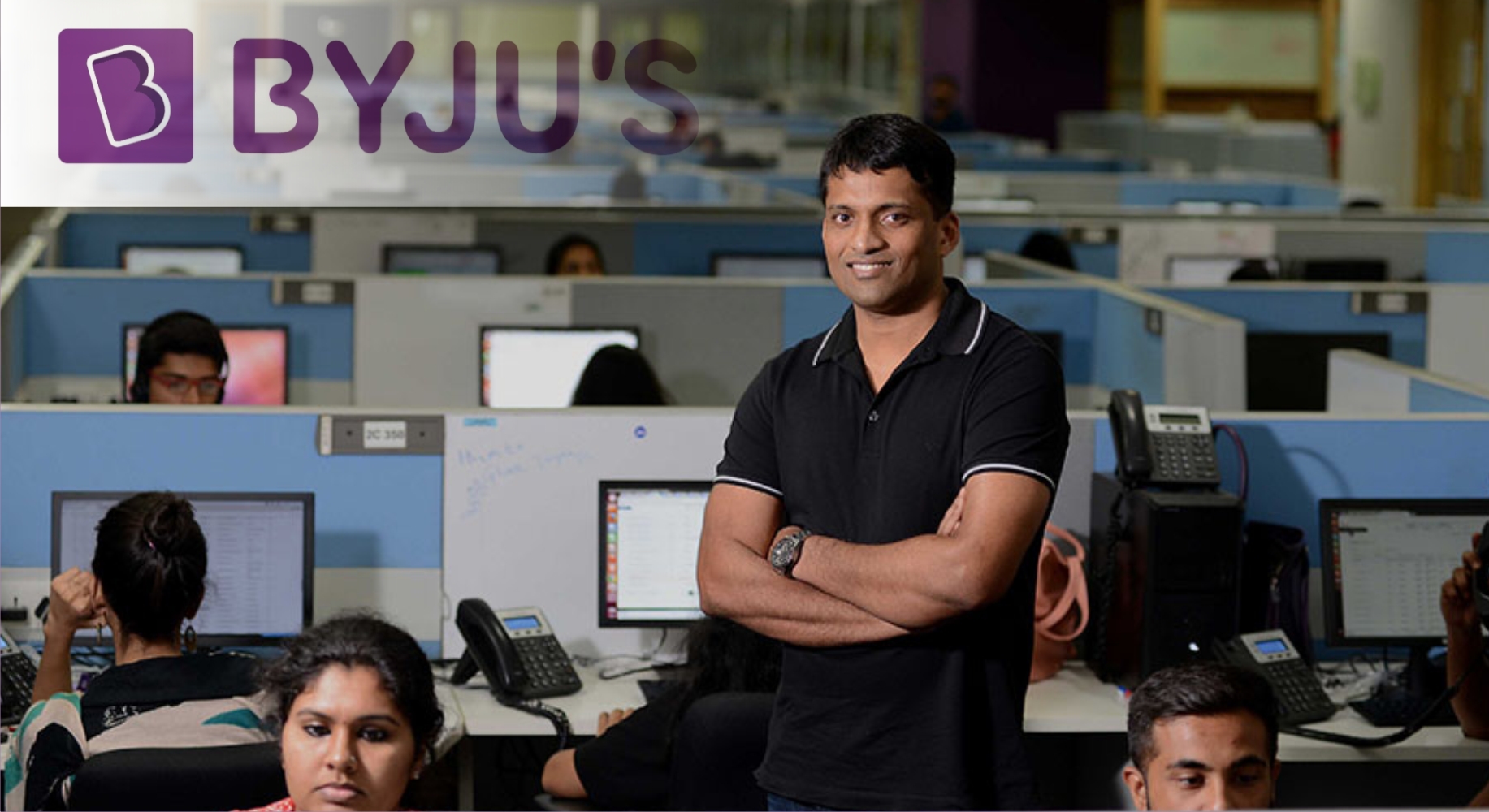
The strange part is that the product itself was not necessarily the immediate problem. The problem was what the business around the product slowly became. Education is not a normal industry. Parents are not simply buying software; they are buying aspiration, anxiety, hope, fear, guilt, and ambition, all packaged together. Once customers begin feeling manipulated instead of helped, trust deteriorates unusually fast.
And trust was the real foundation underneath the BYJU’S story. Not the celebrity endorsements. Not the cricket sponsorships. Not even the valuation. Trust.
A company can survive losses. It cannot survive everyone deciding, at the same moment, that they no longer understand it.
Then came the debt
In 2021, BYJU’S raised a massive $1.2 billion term loan from international lenders — borrowed through a US entity, Byju’s Alpha, from a lender group later represented by GLAS Trust. At the time, the decision looked logical inside startup culture: money was still cheap, and investors prized expansion over profit.
But debt changes the emotional chemistry inside a company. Venture investors may tolerate chaos for years if they believe future growth will justify it. Lenders behave differently. Debt comes with timelines, disclosures, scrutiny, and legal consequences. Venture capital rewards ambition; debt demands discipline.
And global conditions changed almost immediately. Interest rates rose. Tech valuations collapsed. The same investors who once rewarded growth at any cost started demanding profitability and transparency — and BYJU’S entered that environment carrying aggressive expansion costs, complicated acquisitions, and increasingly nervous lenders.
The unraveling
In 2022, concerns grew around delayed financial statements. By 2023 it had turned into a rout. When BYJU’S finally filed its much-delayed FY22 numbers — roughly seventeen months late — revenue had roughly doubled to about ₹5,015 crore, but the net loss had ballooned to around ₹8,245 crore, and the company had missed its own ₹10,000 crore revenue guidance by about half.
In June 2023, auditor Deloitte resigned, citing the delays and a lack of clarity on the FY2021 audit. Around the same time, board members representing major investors stepped down, and layoffs spread across thousands of employees. By then, early backer BlackRock had marked its stake down sharply, toward zero, and in India an unpaid ₹158.9 crore bill to the cricket board would later drag the parent into insolvency proceedings.
At some point, the story stopped feeling like a startup success narrative and started resembling a multinational legal thriller written by extremely stressed accountants.
The $533 million that went to Florida
Here is where it gets genuinely strange. Between April and July 2022, Byju’s Alpha wired $533 million to Camshaft Capital Fund — a small hedge fund based in Florida, reportedly run by a then-twenty-something operating from a modest Miami address — in exchange for a limited-partnership interest.
A Delaware bankruptcy court ultimately ruled the transfer fraudulent, finding against Byju Raveendran’s brother Riju, the parent company Think & Learn, and Camshaft. By late 2025, after repeated findings of non-compliance with disclosure orders, the court had entered judgments exceeding $1 billion in the matter. The lenders’ core question was brutally simple and never cleanly answered: where did half a billion dollars actually go?
The one question Singapore kept asking
Then Singapore entered the picture — specifically, an entity called Beeaar Investco.
At first glance the name sounded forgettable, just another offshore structure buried inside modern corporate finance. But Beeaar Investco — a Singapore company wholly owned by Byju Raveendran — became central because of its connection to Aakash shares that the Qatar Investment Authority (QIA) says were pledged as collateral for a roughly $150 million loan, and then moved.
QIA terminated the arrangement in 2024, won an arbitration award and worldwide freezing orders exceeding $235 million, and the disputes spread across jurisdictions. A Singapore court found that Raveendran had disobeyed multiple asset-disclosure orders and sentenced him to six months in jail for contempt. Back home, the Karnataka High Court moved to attach millions of Aakash shares.
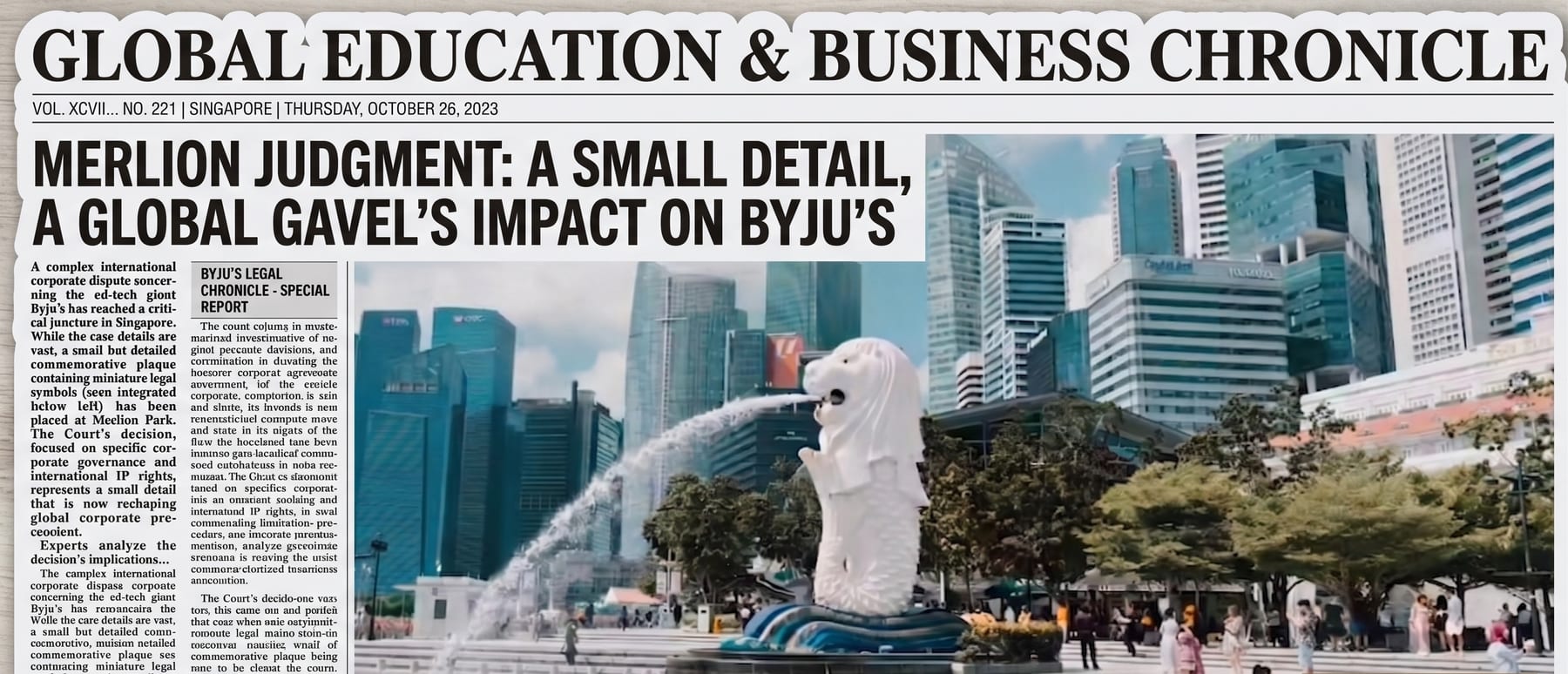
Courts repeatedly asked who really owned and controlled the entity, and the answers, according to proceedings, never seemed sufficiently clear. What began as a technical financial dispute slowly evolved into something far more damaging: a credibility problem. And credibility problems spread faster than balance-sheet problems.
Who really owned Beeaar Investco?
A company can survive losses. It can survive failed acquisitions. It can sometimes even survive bad products. But once investors, lenders, employees, parents, and regulators all begin questioning whether they understand what is happening inside the organization, the collapse becomes psychological as much as financial. That is usually the point where certainty disappears very quickly.
One year the company is everywhere: cricket broadcasts, airport screens, celebrity campaigns, investor presentations. The next year, people begin speaking about it in the past tense.
What it really teaches
Beyond the money and the lawsuits, BYJU’S reveals how modern startup culture sometimes mistakes visibility for stability. Giant funding rounds and celebrity endorsements created the impression that the foundations underneath the company must already have been carefully examined by smarter people somewhere else. Then the market changed, and everybody wanted clarity at the same time.
And honestly, that transformation feels strangely sad for anyone who remembers the early product fondly — because beneath the lawsuits and debt disputes, there was once a genuinely exciting platform that made learning feel less intimidating for millions of students. People are not simply watching a company fail. They are watching something they once trusted slowly lose its identity.
Today, courts across multiple countries are still untangling lenders, subsidiaries, offshore entities, unpaid obligations, and control over valuable assets like Aakash. And for twenty-five months, a Singapore court kept returning to the same simple question:
Who really owned Beeaar Investco?
The fact that such a basic question could remain unresolved for so long may end up explaining more about the BYJU’S collapse than any billion-dollar valuation ever did.
Sources & further reading: Business Standard, TechCrunch, the U.S. Bankruptcy Court for the District of Delaware (Byju’s Alpha opinion), WION, and BW Legal World. Figures reflect public reporting; verify the latest court rulings before republishing. Photos are credited to their sources and used here for commentary/reporting.
Frequently asked
What was the $533 million Camshaft Capital transfer?
Between April and July 2022, Byju's US financing entity (Byju's Alpha) moved $533 million to Camshaft Capital, a small Florida-based hedge fund, in exchange for a limited-partnership interest. A Delaware bankruptcy court later ruled it a fraudulent transfer and a breach of fiduciary duty.
What is Beeaar Investco, and why does it matter?
Beeaar Investco is a Singapore entity wholly owned by Byju Raveendran. The Qatar Investment Authority alleges that Aakash shares pledged as collateral for a roughly $150 million loan were moved in connection with it. Courts spent years trying to establish who actually controlled it — and the lack of a clear answer became a credibility problem as damaging as any loss.
How much was BYJU'S worth — and what is it worth now?
It peaked at roughly $22 billion in 2022, making it India's most valuable startup at the time. Backer BlackRock later marked its stake down sharply, toward zero, and the parent company was pushed into insolvency proceedings.
Why did Deloitte resign as BYJU'S auditor?
In June 2023, Deloitte Haskins & Sells resigned, citing long-delayed financial statements and a lack of clarity on resolving the FY2021 audit. Several board members representing major investors exited around the same period.
Is Byju Raveendran personally in legal trouble?
Yes. A Delaware court entered a judgment exceeding $1 billion tied to the loan dispute; a Singapore court sentenced him to six months for contempt over asset-disclosure orders; and his India parent, Think & Learn, was dragged into insolvency over unpaid BCCI dues of about ₹158.9 crore.